Medicine is not simply the art of knowing diseases. It is the art of recognizing patterns, interpreting uncertainty, asking the right questions, and making sound clinical decisions when the diagnosis is not immediately obvious.
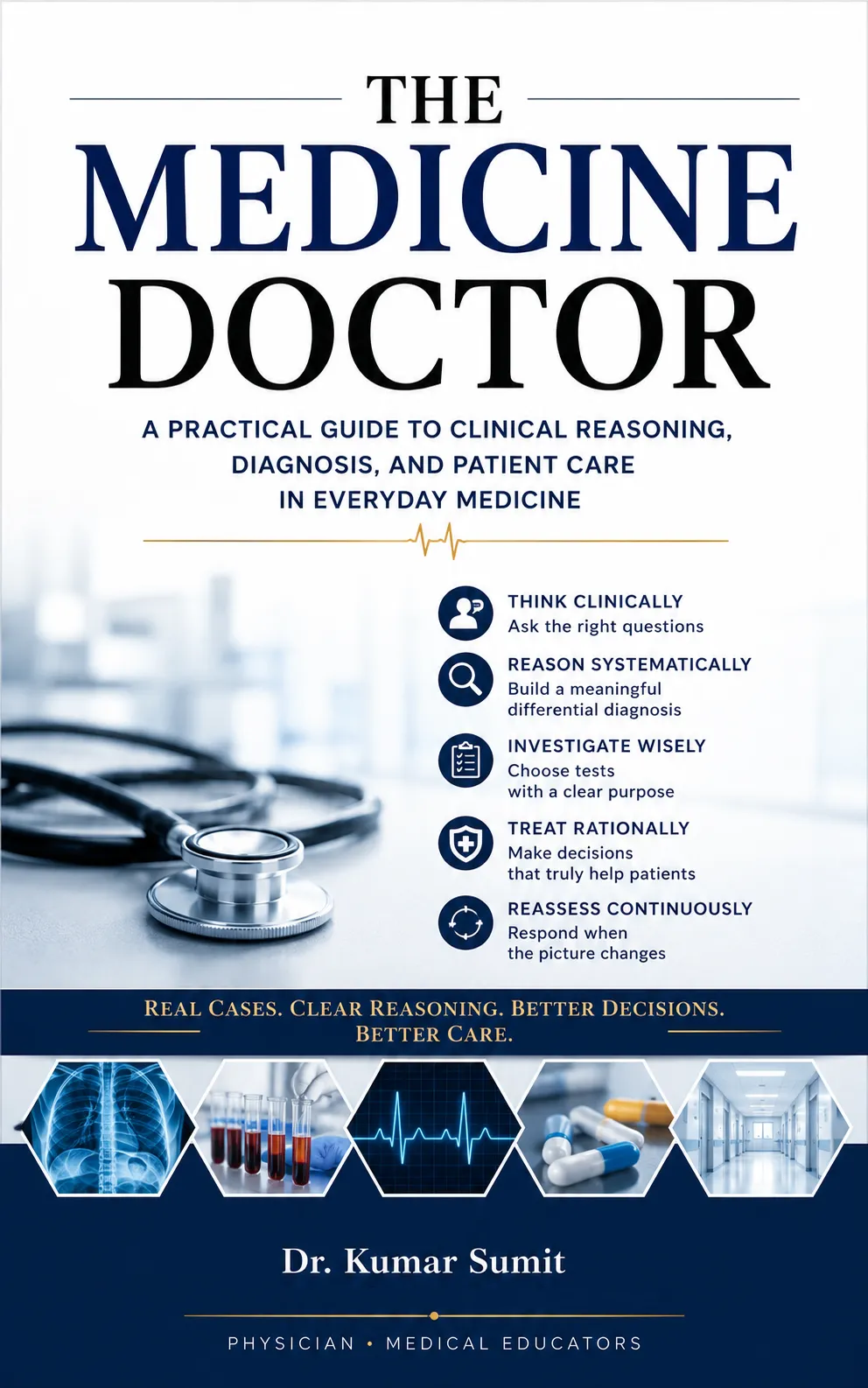
The Medicine Doctor is a practical clinical guide built around the way physicians think. Through realistic clinical cases and step-by-step reasoning, the book follows the patient journey from first impression and differential diagnosis to investigation, treatment, reassessment, and follow-up.
Rather than presenting medicine as isolated facts, this book focuses on the reasoning that connects them. It examines how the history changes the differential diagnosis, how examination findings alter clinical probability, when an investigation is necessary, how results should be interpreted in context, and how treatment decisions evolve.
The book also highlights common cognitive traps, including premature closure, anchoring, over-investigation, failure to recognize deterioration, and misinterpretation of reassuring findings.
Designed for medical students, residents, junior doctors, and clinicians seeking to strengthen their clinical approach, The Medicine Doctor turns clinical encounters into lessons in practical diagnostic reasoning and bedside decision-making.
Readers will learn to build a focused first impression, develop a meaningful differential diagnosis, identify findings that change diagnostic probability, choose purposeful investigations, interpret results in context, recognize dangerous diagnoses, make rational treatment decisions under uncertainty, and reassess patients when the clinical picture changes.
The Medicine Doctor is ultimately about a fundamental principle of clinical medicine: good doctors do not merely recognize diseases. They recognize patients, interpret evidence, weigh probabilities, and make decisions.
This is medicine as it is practiced—uncertain, dynamic, analytical, and human.